About HITA
Building partnerships of people and institutions for a reimagined Himalaya.
HITA, the Himalayan Institute for Transformative Actions, was set up by people who have spent their working lives in development, environment and public policy. It is a registered charitable trust (Registration No. HP 155/2025) based in Palampur, Himachal Pradesh, working across the Himalayan states with a focus on Himachal. Travellers on similar paths who came together to carve a shared journey.
We describe ourselves as an ecosystem enabler. In plain words: we do not run large projects of our own. We design and run the processes through which governments, business, civil society and communities plan together, and we push the results into the programmes and budgets that can carry them out.
Why the Himalaya needs its own model
Mountains are not the plains. Land, water, energy, transport and markets all work differently here, and development models imported from the lowlands routinely fail or do damage. We think the Himalaya can skip parts of the classical development path altogether, using its niche advantages, new technology and blended finance. Working out what that looks like in practice, sector by sector and landscape by landscape, is HITA's core purpose.
Convene
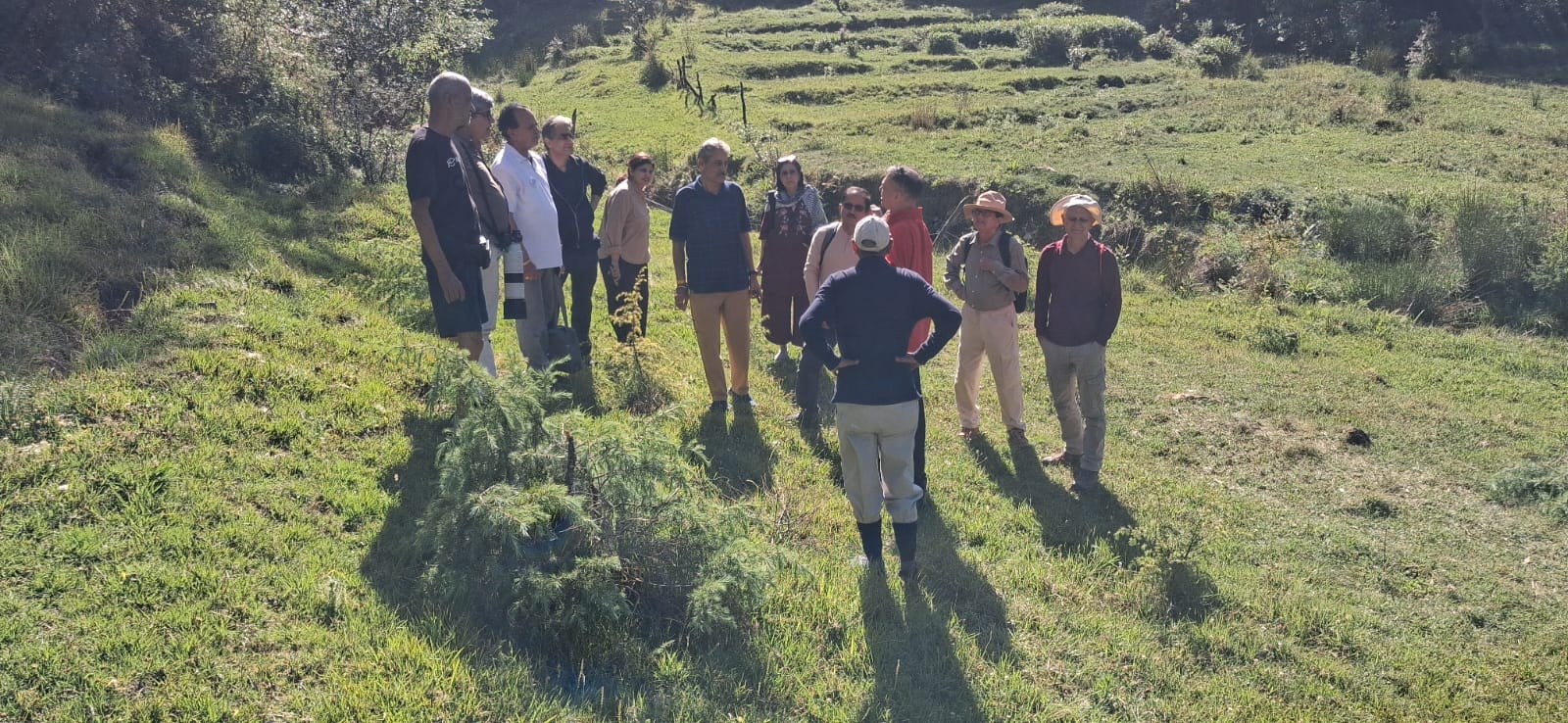
We start by getting the right people in the room. HITA has working relationships across government, the private sector and civil society in Himachal Pradesh and beyond. Each engagement begins with a clear question, whether that is a state's long-term vision or a town's waste problem.
Curate
Then we design and run the process itself: working groups, citizen consultations, expert panels, and the coordination behind them. For SAMRIDH Himachal Vision 2045, that meant a year of work with 8 thematic groups headed by departmental Secretaries and 32 sub-groups, plus a project management unit to hold it all together.
Catalyse
A report only matters if someone acts on it. We follow our recommendations into implementation. In Palampur, ideas from our citizen consultation are moving into district programmes, and we work directly with the Municipal Corporation on waste.
How HITA is organised
A two-member Board of Trustees holds fiduciary responsibility: legal compliance, financial stability, and the strategic direction of the Trust. The founding trustees are Anurag Kashyap and Dr. Rajesh Kumar Sood.
The Secretariat runs the day-to-day work: programme coordination, governance and oversight. It is headed by Rajeev Ahal (Executive Director) with Dr. Manab Chakraborty (Director). Each brings around four decades of experience in policy and programme work.
For specific themes, the Trust appoints small advisory committees of up to five independent experts. They produce considered analysis, guide programmes, and strengthen HITA's governance.
Our three focus areas
Springshed revival, agroecological farming, waste management and other nature-based work that supports both landscapes and livelihoods.
Vision documents, budget analysis and policy recommendations, developed with the government offices that will use them.
Partnerships across government, business, philanthropy and civil society, because most of this work needs more than one organisation.